Licensed commercial cleaning standards for Kensington shops
Running a shop in Kensington means every detail is on display. The floor, the glass, the entrance mat, even the smell when a customer walks in. That is why Licensed commercial cleaning standards for Kensington shops matter so much: they are not just about looking tidy, but about meeting the practical expectations that protect staff, customers, stock, and reputation.
For shop owners, managers, and landlords, the tricky part is knowing what "proper" commercial cleaning actually looks like. Is it just a quick wipe-down, or a documented, insured, risk-aware process with trained cleaners, correct products, and clear accountability? Truth be told, it should be the latter. In this guide, we break down what good standards look like, how they work in real life, where compliance matters, and how to choose cleaning support that fits a busy Kensington retail environment without causing disruption.
Table of Contents
- Why Licensed commercial cleaning standards for Kensington shops Matters
- How Licensed commercial cleaning standards for Kensington shops Works
- Key Benefits and Practical Advantages
- Who This Is For and When It Makes Sense
- Step-by-Step Guidance
- Expert Tips for Better Results
- Common Mistakes to Avoid
- Tools, Resources and Recommendations
- Law, Compliance, Standards, or Best Practice
- Options, Methods, or Comparison Table
- Case Study or Real-World Example
- Practical Checklist
- Conclusion
- Frequently Asked Questions
Why Licensed commercial cleaning standards for Kensington shops Matters
Kensington shops operate in a setting where presentation, footfall, and customer trust all overlap. A polished shopfront is one thing, but the back-of-house areas, staff facilities, and touchpoints are just as important. When cleaning standards are inconsistent, people notice. Sometimes instantly. A smudged glass door or sticky floor can quietly send the wrong message before anyone has even spoken to the customer.
Licensed commercial cleaning standards help create consistency. They give structure to the cleaning process, define who is responsible, and reduce the chance of shortcuts. In a retail setting, that matters because dirt, dust, spills, and odours build up quickly. High-traffic entrances bring in grit. Shelving gathers dust. Washrooms need a different level of attention from the sales floor. And if you sell food, cosmetics, clothing, or premium goods, expectations climb even higher.
There is also the trust element. Customers may never ask who cleaned the premises, but they do care whether the environment feels cared for. Staff care too. A cleaner workspace supports morale and reduces avoidable hazards. Let's face it, nobody enjoys working beside a bin that smells, a dusty skirting board, or a mop bucket that seems to have a life of its own.
For businesses that outsource cleaning, "licensed" is often used loosely. In practice, it usually means a provider that operates with proper business registration, relevant insurance, trained staff, documented procedures, and safe working practices. It is not a magic badge. It is a standard of professionalism that should be visible in the way the work is planned, carried out, and checked.
Practical takeaway: the best cleaning standard is the one that protects your shop day after day, not just the one that looks good on paper. If it cannot be repeated consistently, it is not really a standard.
How Licensed commercial cleaning standards for Kensington shops Works
Commercial cleaning in a shop usually starts with a site-specific plan. That plan should reflect the type of business, opening hours, materials in use, and the level of customer traffic. A boutique with display shelving and delicate surfaces needs a different approach from a convenience store, salon, or small food retailer. The same goes for a compact unit versus a larger premises with stockrooms, toilets, and staff kitchens.
At a basic level, a good cleaning standard covers five things:
- Scope: what areas are cleaned, how often, and to what finish.
- Method: which products, tools, and techniques are used on each surface.
- Safety: how hazards are controlled, including wet floors, chemicals, and equipment.
- Supervision: how quality is checked and issues are reported.
- Records: what evidence exists that the work was completed properly.
In real life, that can mean a cleaner arrives after closing, follows a room-by-room task list, uses colour-coded cloths to reduce cross-contamination, and signs off completed work. For periodic deep cleans, the process may also include machine cleaning, low-moisture methods, descaling, internal glass work, or detailed attention to grilles, hinges, and hard-to-reach corners.
Retail cleaning also tends to be time-sensitive. You cannot always shut the shop for a full day, so the service must fit around trading hours. Early morning, late evening, and one-off deep-clean windows are common. If a spill happens on a busy Saturday, the response needs to be quick and calm. The best teams understand that the operational reality matters just as much as the checklist.
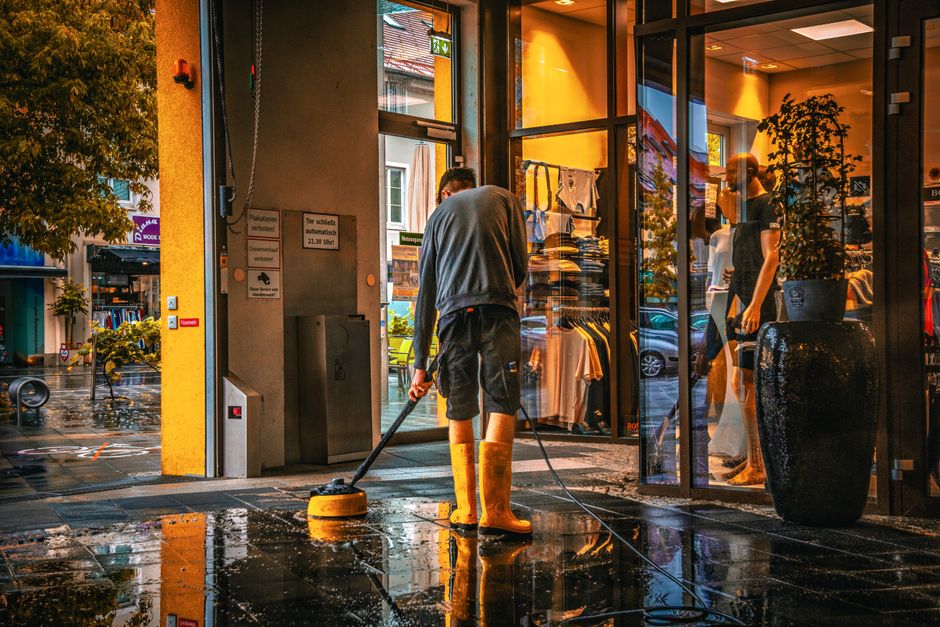
Many shop owners also need specialist add-ons, depending on the premises. For example, window cleaning can make a surprising difference to how welcoming a storefront feels, while hard floor cleaning is often essential where polished entrances, tiles, or safety flooring are used. If carpets or rugs are part of the customer space, targeted floor care may sit beside broader deep cleaning.
Key Benefits and Practical Advantages
Good cleaning standards are not only about hygiene. They affect the day-to-day rhythm of the business, the customer experience, and the lifespan of the premises. Here are the benefits shop owners usually care about most.
- Better first impressions: a clean entrance and polished shop floor can make the whole premises feel more premium.
- Fewer slips and trip risks: sensible cleaning routines reduce wet-floor mistakes and clutter.
- Longer-lasting surfaces: the right products and methods help protect floors, glass, fixtures, and fittings.
- More predictable operations: scheduled work is easier to manage than emergency cleaning every few days.
- Clearer accountability: documented standards make it easier to spot gaps and resolve issues.
- Staff confidence: teams work better in a shop that feels organised and cared for.
There is a quieter benefit too: better standards reduce the hidden costs of poor cleaning. Think damaged floor finishes, stained grout, greasy corners, or the slow build-up of dust behind displays. Those problems rarely happen all at once. They creep in. Then one day, you suddenly notice them and wonder how the place got that tired-looking.
For Kensington retail premises, where image matters and space is often at a premium, a strong cleaning routine helps keep the shop looking considered rather than scruffy. That sounds simple, but it is one of those things customers register immediately, even if they do not consciously say so.
Who This Is For and When It Makes Sense
Licensed commercial cleaning standards make sense for any shop that wants reliability rather than guesswork. They are particularly useful for business owners who cannot afford inconsistency, such as:
- fashion retailers and boutiques
- hair and beauty shops
- pharmacies and health-related retailers
- food retail and grab-and-go premises
- gift shops, galleries, and premium showrooms
- mixed-use premises with customer areas and stockrooms
- units with glass fronts, tiled entrances, or high-traffic floors
It also makes sense if your current arrangement is patchy. Maybe staff are "doing a bit of cleaning" between customers. Maybe the rota is unclear. Maybe the place looks fine most days, but the deep clean only happens when somebody complains. That kind of setup can work for a while. Usually until it does not.
If you are managing a short-term lease, preparing for an inspection, or trying to stabilise a shop that has been busy through seasonal peaks, setting proper standards early is one of the smartest moves you can make. The same applies after refurbishments or fit-out work, where dust and residue have a habit of hiding in plain sight. In those cases, an after builders cleaning can be a sensible reset.
Sometimes the right answer is not daily full-service cleaning, but a combination of regular maintenance and occasional specialist support. A smaller retailer, for example, might use routine office cleaning style maintenance for back-of-house areas, then bring in extra support for floors, glass, or seasonal deep cleans. Not fancy. Just practical.
Step-by-Step Guidance
If you are setting up cleaning standards for a Kensington shop, the easiest way is to work from the premises backwards. Start with the space, the risk points, and the trading pattern. Then build the standard around that.
- Map the premises. List every area: sales floor, entrance, counter, toilet, staff room, stockroom, basement, steps, and exterior touchpoints.
- Identify risk surfaces. Glass doors, shiny floors, washrooms, food prep areas, and high-touch handles usually need special attention.
- Decide the frequency. Some tasks are daily, some weekly, and some should be monthly or periodic. Avoid treating everything the same.
- Choose safe methods. Match products and techniques to the surface. Not every cleaner suits every finish, and that is where mistakes creep in.
- Write the standard down. A simple checklist beats vague memory. People forget. It happens.
- Assign responsibility. Whether the work is in-house or outsourced, make sure someone owns the result.
- Inspect and improve. Check the work regularly, note repeat issues, and update the plan when the shop changes.
A useful habit is to separate "visible cleaning" from "detail cleaning." Visible cleaning handles what customers see first. Detail cleaning deals with the corners, edges, behind displays, and the less glamorous bits that quietly shape the overall impression. Both matter.
If your shop has mixed surfaces, you may also need a staggered approach. For instance, carpets in display areas can need different treatment from sealed floors or front-facing windows. That is where specialist support such as carpet cleaning, sofa cleaning, or upholstery cleaning may become part of the overall standard rather than an occasional extra.
Expert Tips for Better Results
To be fair, most cleaning problems in shops are not caused by bad intentions. They come from rushed routines, unclear expectations, or using the wrong method on the wrong surface. A few small changes can make a big difference.
- Keep entry points on a short cycle. The first metre inside the door often gathers the most grit and marks. It needs attention more often than the back wall.
- Use a "top to bottom" approach. Dust falls. If you clean the floor first, you may end up doing it again.
- Label what is for what. Cloths, mop heads, and sprays should not all end up doing every job. Cross-use is where things get messy, literally.
- Watch fragrance levels. A clean shop should smell clean, not like a perfume counter in overdrive.
- Make glass a priority. Shopfront glazing and mirrors affect perceived cleanliness more than many owners expect.
- Build in a fast spill response. One wet footprint on a polished floor can undo a lovely first impression in seconds.
If you are dealing with regular traffic from the street, weather, and packaging waste, schedule a short midweek reset rather than waiting for a bigger clean. That one practical habit can save a lot of hassle. A shop can look fine at 9:00 a.m. and noticeably tired by 2:00 p.m., especially on rainy days when London pavements bring half the city indoors on someone's shoes.
Another tip: do not let cleaning standards become invisible. Staff should know what "good" looks like. If nobody can describe the expected finish, you probably do not have a standard yet. You have a hope. And hope is not a plan.
Common Mistakes to Avoid
Commercial cleaning mistakes often seem small at first, then become expensive. The most common ones are easy to spot once you know what to look for.
- Using a one-size-fits-all schedule. A fitting room and a stockroom do not need the same level of attention.
- Choosing price over process. The cheapest option can look attractive until the quality falls off a cliff.
- Skipping risk assessments. Wet floors, electrical equipment, and chemical storage deserve proper thought.
- Ignoring the back-of-house. Customers may not see it, but staff live with it all day.
- Not checking credentials. A professional cleaner should be able to explain insurance, training, and procedures clearly.
- Leaving complaints vague. "It's not clean enough" is a start, not a useful brief.
Another common issue is overcleaning delicate surfaces. Too much product, too much water, or the wrong pad can dull finishes and shorten the life of fixtures. That is why technique matters as much as effort. Sometimes less is more. Strange but true.
And please, if you have ever seen a mop used on every surface in the building, you will know why proper standards exist in the first place.
Tools, Resources and Recommendations
You do not need a mountain of equipment to maintain strong standards, but you do need the right basics. The best cleaning setups are usually simple, disciplined, and easy to repeat.
| Tool or resource | Why it helps | Best used for |
|---|---|---|
| Colour-coded cloths | Reduces cross-contamination and keeps tasks organised | Washrooms, counters, glass, and general surfaces |
| Microfibre system | Improves dust capture and leaves fewer streaks | Display units, shelves, fixtures, and detailing |
| Appropriate floor care kit | Protects finishes and supports safer maintenance | Sealed floors, tiles, vinyl, and entrance areas |
| Inspection checklist | Makes performance easier to track and improve | Daily or weekly sign-off |
| Insurance and safety records | Supports trust and accountability | Contractor onboarding and review |
If you are hiring a provider, it is worth reviewing their health and safety policy and insurance and safety information. Those pages may sound administrative, and yes, they are. But that paperwork tells you a lot about how seriously the company treats risk, staff welfare, and professional standards.
You might also want to understand how a provider handles quotes, scope changes, and payment terms before committing. Clear commercial terms prevent awkward surprises later, which is always nice. Nobody wants a billing conversation to become the most memorable thing about a cleaning contract.
Law, Compliance, Standards, or Best Practice
For shop cleaning in the UK, the safest approach is to think in terms of general legal duties and industry best practice rather than expecting one single "licensed cleaning law." In reality, compliance usually touches several areas at once: health and safety, chemical handling, workplace responsibility, insurance, staff training, waste control, and fair employment practices where relevant.
Shop owners should make sure cleaning arrangements do not create avoidable hazards. That means thinking about slip risks, signage, storage of products, safe access to elevated areas, and how cleaners work around customers, stock, and electrical equipment. If cleaning is carried out by an external company, it is sensible to confirm that they have procedures for reporting incidents, handling keys, securing premises, and escalating issues.
Best practice in a Kensington retail setting usually includes:
- a written scope of work
- risk-aware cleaning methods
- trained cleaners with suitable supervision
- appropriate business insurance
- clear complaint handling
- environmentally considered product use where practical
- respect for accessibility and customer movement through the space
Where cleaning extends beyond the sales area, you may also need to think about specialist tasks such as oven cleaning in food-related spaces, or window cleaning where visibility and frontage matter. For premises with dust-heavy trades nearby or recent works, after builders cleaning can be a sensible one-off intervention before regular maintenance begins.
Compliance also includes how you treat people. A supplier with a clear modern slavery statement and a visible complaints process tends to signal stronger governance overall. It does not guarantee perfection, of course, but it is part of the picture. Good businesses usually make the basics easy to find.
Options, Methods, or Comparison Table
Most Kensington shops will choose one of three approaches: in-house cleaning, outsourced regular cleaning, or a hybrid model. Each has its place, and the right one depends on your space, budget, and how much control you want day to day.
| Approach | Strengths | Limitations | Best fit |
|---|---|---|---|
| In-house cleaning | High control, immediate response, familiar staff | Requires training, scheduling, and management | Smaller shops with stable teams |
| Outsourced cleaning | Professional standards, flexibility, scalability | Needs clear briefing and contract oversight | Busy shops, multi-area premises, or changing schedules |
| Hybrid model | Balances daily upkeep with specialist support | Can become confusing if responsibilities are unclear | Shops with regular traffic plus periodic deep-clean needs |
For many retailers, the hybrid model is the sweet spot. Staff handle quick touch-up tasks during the day, while a professional crew takes care of heavier work, periodic detail cleaning, and less visible areas. It is often more realistic than asking one team to do everything. Shops are busy. People are busy. No one needs an overcomplicated system just for the sake of it.
If your premises have carpets, soft seating, or customer waiting areas, specialist services can slot neatly into the hybrid approach. That may include rug cleaning, sofa cleaning, or upholstery cleaning to keep finishes fresh without replacing them too soon.
Case Study or Real-World Example
Imagine a small Kensington boutique with a glass frontage, pale flooring, a fitting area, and a compact staff room at the back. The owner notices that the shop looks great first thing in the morning, but by Friday evening the entrance floor is scuffed, the glass is marked, and the fitting-room seating looks a little tired. Nothing dramatic. Just enough to chip away at the overall feel.
The fix is not to send someone in with a random list of tasks. Instead, the owner sets a cleaning standard around the actual use of the space:
- entrance and glass cleaned daily
- floor edges and corners detailed twice weekly
- fitting rooms checked after peak hours
- staff room cleaned on a separate schedule
- soft furnishings reviewed monthly
- a weekly inspection sign-off kept on file
Within a few weeks, the shop feels more consistent. Staff spend less time improvising, and the owner is not scrambling before every weekend rush. The important thing here is not the exact tools used. It is the discipline behind the routine. A good standard turns cleaning into a manageable system rather than a constant fire drill.
That is the real value of licensed commercial cleaning standards: calm, repeatable, and easy to trust. Not glamorous, perhaps, but very effective.
Practical Checklist
Use this checklist when reviewing or setting up cleaning standards for a Kensington shop.
- Have you listed every customer-facing and back-of-house area?
- Do you know which surfaces need daily, weekly, and monthly attention?
- Are the cleaning methods suitable for each material and finish?
- Is there a clear process for spills, incidents, and urgent touch-ups?
- Have you confirmed insurance and safety arrangements with the cleaner or company?
- Do staff know what "clean enough" looks like?
- Is there a simple way to record completed work and flag problems?
- Are specialist tasks like floor care, glass cleaning, or upholstery included where needed?
- Have you reviewed terms, access arrangements, and complaint handling?
- Does the schedule fit around opening hours without causing disruption?
If you can tick most of those boxes, you are already ahead of many premises that rely on guesswork. And if you cannot, that is fine too. Better to spot the gaps now than after a customer points them out. Nobody enjoys that moment.
Get a free quote today and see how much you can save.
Conclusion
Licensed commercial cleaning standards for Kensington shops are really about consistency, care, and control. They help protect the customer experience, reduce avoidable risks, and keep a busy retail space looking ready for trade rather than merely "clean-ish." In a part of London where presentation matters and expectations are high, that consistency is worth a lot.
The strongest approach is usually the simplest one: set clear standards, match the method to the space, check the results, and update the routine when the shop changes. Whether you handle some tasks in-house or rely on a professional team, the goal is the same. A shop that feels calm, safe, and cared for.
If you are refining your current cleaning plan, start with the areas customers see first, then move outward to the spaces that keep your business running quietly in the background. It is often the little details that hold the whole thing together. Funny how that works, really.
And once the standard is in place, you will notice the difference every single day.
Frequently Asked Questions
What does licensed commercial cleaning mean for a shop?
In practice, it usually means the cleaning provider operates professionally, with proper insurance, trained staff, documented procedures, and a clear approach to safety and accountability.
Do Kensington shops need a different cleaning standard from other businesses?
The core principles are similar, but Kensington shops often need a stronger focus on presentation, customer flow, and maintaining a polished front-of-house environment.
How often should a retail shop be professionally cleaned?
That depends on footfall, layout, and the type of shop. Many premises benefit from daily maintenance, with deeper periodic cleaning layered in as needed.
What should be included in a commercial cleaning checklist?
A useful checklist should cover entrances, floors, glass, counters, washrooms, back-of-house areas, touchpoints, bins, and any specialist surfaces such as carpets or upholstery.
Is deep cleaning the same as regular commercial cleaning?
No. Regular cleaning keeps the shop presentable day to day, while deep cleaning deals with built-up dirt, detailed areas, and less frequent maintenance tasks.
How do I know if a cleaning company is reliable?
Look for clear communication, written scope, insurance, safety procedures, complaint handling, and a sensible plan that matches your shop rather than a generic package.
What are the most important health and safety issues in shop cleaning?
Slip hazards, chemical use, equipment safety, access to busy areas, and secure storage are some of the main issues. A proper cleaning standard should address all of them.
Can staff handle part of the cleaning themselves?
Yes, and many shops do. A hybrid approach often works well, with staff handling light upkeep and professionals managing heavier or more specialised tasks.
What should I do after refurbishment or shop fit-out work?
After building work, dust and residue can linger in corners and on surfaces. A specialist after builders clean is often a sensible first step before returning to normal cleaning routines.
How do I keep glass fronts and display areas looking clean for longer?
Frequent light cleaning, quick spill response, and the right cloths and products help. Glass and high-touch display areas usually need more attention than people expect.
Are eco-friendly cleaning methods suitable for retail premises?
Often yes, provided the products and methods still meet the required standard for the surface and task. Sustainability is useful, but it should not come at the expense of hygiene or safety.
What is the biggest mistake shop owners make with cleaning standards?
The biggest mistake is leaving standards vague. If nobody knows what is expected, who is responsible, or how quality is checked, the cleaning will drift sooner or later.
How do I get started if my current cleaning routine is not working?
Start with a simple audit of the space, list the problem areas, set priorities, and introduce a written checklist. From there, you can refine frequency, methods, and supervision step by step.